This is not the same ranking as our general no-KYC exchange list. Here, services move up or down based on Bitcoin-specific factors such as BTC availability in both directions, route depth, quote handling and practical network checks. QuickEx remains our first choice, while the rest of the order changes to reflect the BTC use case.
Best No-KYC Bitcoin Exchanges Compared
| Exchange | BTC Support | Account | Routine KYC | Conditional KYC | BTC Routes | Rate Type | Minimum | Editorial Rating |
|---|---|---|---|---|---|---|---|---|
| QQuickEx | Send / Receive BTC | Not required for standard swap | Usually no | May depend on route/policy | Broad, including BTC↔XMR | Fixed / Floating | Pair-dependent | 9.7/10 |
| FFixedFloat | Send / Receive BTC | No standard registration | No for standard exchange | Exceptional/risk review possible | Major BTC crypto routes | Fixed / Floating | Pair-dependent | 9.4/10 |
| SSideShift | Send / Receive BTC | No conventional signup | No routine KYC form | Flagged shifts may be reviewed | Broad direct-settlement routes | Fixed / Variable | Pair-dependent | 9.2/10 |
| CChangeHero | Send / Receive BTC | No account required | No mandatory routine KYC | Risk-based verification possible | Broad BTC pairs, including XMR | Fixed / Floating | Pair-dependent | 9.1/10 |
| GGodex | Send / Receive BTC | No account required | No routine identity form | Compliance controls may apply | Broad BTC coverage | Fixed / Floating | Pair-dependent | 9.0/10 |
| HHusher | BTC supported | No account required | No KYC claimed for standard routing | Service/routing constraints still apply | BTC plus privacy-oriented routes | Fixed | Pair-dependent | 8.9/10 |
| SSwapuz | BTC supported | No account for standard swap | No mandatory routine KYC in standard flow | Risk screening can trigger action | Major BTC routes | Rate shown per route | Pair-dependent | 8.6/10 |
| EExolix | Send / Receive BTC | Signup not required | No routine KYC in normal flow | Risk-based due diligence possible | Large route selection | Fixed / Floating | Pair-dependent | 8.5/10 |
| SSimpleSwap | Send / Receive BTC | Usually no account required | Usually no | Risk-based KYC possible | Broad BTC routes | Fixed / Floating | Pair-dependent | 8.4/10 |
| CChangelly | Send / Receive BTC | No registration required for exchange flow | Usually no for standard swap | Flagged transactions can require KYC | Broad BTC routes | Fixed / Floating | Pair-dependent | 8.1/10 |
The score is specific to exchanging Bitcoin through an instant exchanger. It is not a guarantee of security, anonymity or uninterrupted availability. BTC minimums, confirmation requirements and KYC conditions can change by route and jurisdiction.
Top 10 Bitcoin Exchanges Without Routine KYC
1. QuickEx — Best Overall for No-KYC Bitcoin Swaps
QuickEx ranks first because BTC can be used in a straightforward standard exchange and in privacy-oriented routes. The service supports Bitcoin-to-Monero and Monero-to-Bitcoin directions as well as many other crypto pairs, while users can normally start the standard swap flow without creating a permanent account.
Fixed and floating quotes are available for supported routes. QuickEx also offers a Private Swap / Private Send product that is relevant to users who want more than a simple no-registration interface. That feature is designed to reduce a direct on-chain relationship between the original sending and final receiving sides, although it should not be treated as a promise of complete anonymity.
Best for: users who want broad BTC routes plus an optional privacy-oriented exchange mode.
2. FixedFloat — Best for BTC Rate Transparency
FixedFloat is particularly strong when the user wants a clear choice between fixed and floating pricing. Its standard exchange flow does not require conventional account registration, and Bitcoin is available as a major send and receive asset.
For BTC users, the main advantage is the compact quote flow: choose the pair, select a rate type, verify the receiving address and fund the order. The main caveat is conditional compliance review. The service screens transactions and can request additional information in exceptional or higher-risk cases.
Best for: BTC swaps where the rate model and quote conditions matter more than a large account feature set.
3. SideShift — Best for Direct BTC Settlement
SideShift offers a direct-settlement exchange model with Bitcoin among its supported assets. It does not require a conventional signup before a shift, although the service can automatically assign an account ID after a transaction. We therefore describe it as “no conventional signup” rather than claiming there is no account layer at all.
Fixed and variable-rate shifts are available, with the destination address entered before funding the exchange. SideShift also performs transaction-risk screening. A flagged shift can be paused or require additional information, which matters for users specifically searching for a Bitcoin exchange without KYC.
Best for: users who want a lightweight BTC swap with direct payout to the chosen address.
4. ChangeHero — Best for Fast BTC-to-Crypto Routes
ChangeHero provides a broad selection of Bitcoin exchange routes and does not require a permanent account for a standard swap. BTC can be used as either the source or destination asset, and both fixed and floating rate modes are available for supported pairs.
Its Bitcoin-to-Monero route is especially relevant to this site because it gives BTC users a direct crypto-to-crypto path into XMR without first opening a trading account. Standard swaps are not subject to mandatory KYC in every case, but a risk flag can trigger additional verification.
Best for: fast BTC exchange routes with broad coin coverage and no conventional signup.
5. Godex — Best for BTC With Less-Common Assets
Godex combines Bitcoin support with a large catalog of cryptocurrencies, which makes it useful when the second asset is not available on smaller exchangers. Users can start an order without creating a conventional account, and the service supports both fixed and floating approaches for eligible routes.
BTC↔XMR support also makes Godex relevant when comparing Bitcoin routes that include privacy-focused assets. As with any exchanger, users should not assume that no registration makes the Bitcoin transaction invisible or exempt from all compliance controls.
Best for: users who need BTC pairs beyond only the largest market-cap assets.
6. Husher — Best Privacy-Oriented BTC Alternative
Husher is a newer non-custodial routing service built around account-free and no-KYC positioning. Bitcoin is supported, and the platform offers privacy-enhancing routes that can use assets such as Monero or Zcash as part of the exchange path.
It ranks below longer-established services because operating history matters in our Bitcoin comparison. Its privacy-oriented design is a differentiator, but users should still evaluate route availability, quote terms and the service's current policies before sending BTC.
Best for: users exploring privacy-oriented Bitcoin exchange paths and willing to use a newer service.
7. Swapuz — Best for Simple BTC Route Selection
Swapuz supports Bitcoin in its instant exchange flow and publishes route-specific quote information without requiring a conventional account for the standard swap. Current BTC routes show a simple send/receive process and estimated exchange conditions before funding.
Its terms include transaction screening and restrictions for certain jurisdictions, so it does not rank as high for pure no-KYC simplicity as the first six services. Still, it remains a practical BTC exchanger when the selected route is available and the user has checked the current policy.
Best for: straightforward Bitcoin-to-altcoin swaps with visible route details.
8. Exolix — Best for Large BTC Pair Coverage
Exolix supports a very large asset list, giving Bitcoin users more potential routes than many smaller instant exchangers. Standard swaps can be made without mandatory signup, and fixed or floating rates are available.
Its AML/KYC approach is risk-based. That means the typical BTC exchange can begin without routine identity verification, but due diligence may be requested if a transaction triggers compliance controls. Exolix is therefore useful for pair breadth, but not a “verification can never happen” service.
Best for: BTC users who prioritize the number of available exchange pairs.
9. SimpleSwap — Best for an Easy BTC Exchange Interface
SimpleSwap offers Bitcoin across a broad multi-coin exchange catalog. Most standard crypto-to-crypto swaps do not require an account, and fixed or floating modes may be available depending on the pair.
The service can request KYC when an exchange is flagged under its AML process. For normal BTC routes, the user experience remains close to a classic instant exchanger: choose the pair, enter the payout address, send BTC or the source asset and wait for the network and exchange processing to finish.
Best for: users who want a familiar, low-complexity BTC exchange flow.
10. Changelly — Best Established BTC Alternative With Conditional KYC
Changelly supports a wide range of Bitcoin exchange directions and allows exchange transactions without conventional registration. It also offers fixed and floating quotes, making it flexible for users who care about payout certainty.
The reason it ranks tenth is not BTC availability; it is the KYC caveat. Transactions can be held for verification when risk controls are triggered. That policy is compatible with a “no routine KYC” comparison, but it is not the same as an unconditional no-KYC guarantee.
Best for: users who want a long-running exchanger and accept the possibility of transaction-specific verification.
How We Selected No-KYC Bitcoin Exchanges
The Bitcoin ranking uses the same researched pool of 15 services as the main site ranking, but the weighting changes. A service can rank higher here if its BTC implementation is more useful even when it ranks lower on the general page.
We considered:
- Current BTC support in both send and receive directions.
- Breadth of useful BTC-to-crypto and crypto-to-BTC routes.
- Availability of BTC↔XMR where relevant.
- Whether a conventional account is required before a swap.
- Whether KYC is routine or triggered only by risk/compliance conditions.
- Fixed, floating or variable rate availability.
- Clarity of pair-specific minimums and payout estimates.
- How the service handles confirmation and deposit timing.
- Policy transparency around delayed, flagged or incorrectly funded orders.
We excluded Bitcoin trading platforms, P2P marketplaces and Bitcoin ATMs because their transaction model is different from the instant exchanger intent of this page.
How to Exchange Bitcoin Without Routine KYC
The exact interface differs between services, but the standard BTC exchange process is similar:
- Select BTC as the asset you want to send or receive.
- Choose the second cryptocurrency and the correct network.
- Enter the amount and review the estimated payout.
- Select a fixed or floating rate if the service offers both.
- Enter the destination wallet address and verify it carefully.
- Create the exchange and copy the deposit details.
- Send the required cryptocurrency to the displayed deposit address.
- Wait for the required blockchain confirmations and exchange processing.
- Confirm that the payout arrived at the destination wallet.
A no-account flow does not remove the need to check every address and network. Crypto transfers are normally irreversible.
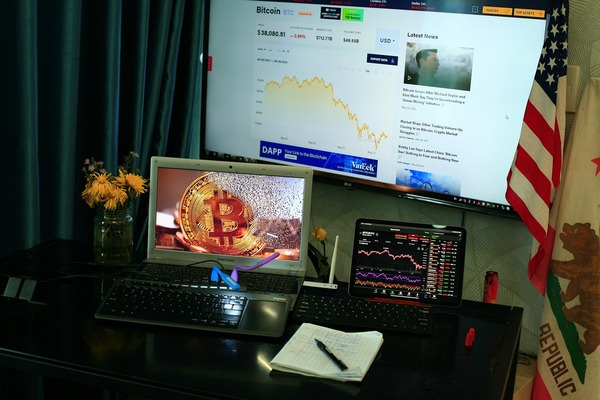
Bitcoin Network Checks Before an Exchange
Bitcoin has its own native network, confirmation times and transaction fees. Before funding an order, verify that the exchanger is asking for native BTC rather than a wrapped token on another network. Check the entire deposit address, not only the first and last characters.
Also review the required confirmations and quote type. A fixed quote usually has a funding window; if the BTC deposit arrives late, the service may recalculate the exchange or handle it under its late-deposit rules. With a floating rate, the final payout can change while the Bitcoin transaction is waiting for confirmation.
Useful pre-deposit checks:
- BTC is selected on the native Bitcoin network.
- The destination address is valid for the receiving asset and network.
- The amount is above the pair minimum.
- The network fee will not reduce the deposit below the required amount.
- The quote is still valid when the BTC transaction is sent.
- You understand how many confirmations the service expects.
- You have saved the exchange/order ID in case support is needed.
No-KYC Bitcoin Exchange vs Traditional Crypto Exchange
| Feature | Instant No-KYC Exchanger | Traditional Trading Exchange |
|---|---|---|
| Primary purpose | One crypto-to-crypto exchange | Ongoing trading and account balances |
| Account | Often not required | Usually required |
| Routine identity verification | Often not required for eligible swaps | Commonly required |
| Conditional checks | Possible | Possible / standard compliance process |
| Custody model | Funds generally pass through for the exchange | Users may maintain balances on platform |
| BTC order type | Quote-based swap | Order book, market/limit orders |
| Best use case | Simple BTC conversion | Active trading, fiat services, advanced tools |
Neither model is automatically better. This page is specifically for users whose intent is to exchange Bitcoin through an instant crypto exchanger without routine KYC.
Can a Bitcoin Exchange Request KYC?
Yes. An exchanger can allow normal BTC swaps without routine identity verification and still request KYC for a particular transaction. Bitcoin deposits can be screened using blockchain analytics. If a transfer is associated with a reported theft, sanctioned entity, fraud pattern or another high-risk signal, the service may pause processing and ask for additional information.
This possibility should be checked before sending BTC because the funds may already be in the exchanger's workflow when the request occurs. Read the current AML/KYC and refund rules for the chosen service, especially for large transfers.
What to Look for in a Bitcoin Exchange Without KYC
Do not choose a Bitcoin exchanger only because its homepage says “no KYC.” Check whether the service supports your exact direction, whether BTC is available at the moment, what rate model is being used and how the service handles late or underpaid deposits.
For BTC specifically, prioritize:
- Native Bitcoin support.
- BTC available as both send and receive asset when needed.
- Clear confirmation requirements.
- A visible fixed/floating rate choice or clearly explained quote model.
- No conventional account requirement for the standard flow.
- Transparent conditional-KYC policy.
- Pair-specific minimums and payout estimate.
- Clear support process for delayed Bitcoin confirmations.
For BTC-to-XMR comparisons, see our no-KYC Monero exchange ranking, where that route is evaluated as part of the XMR-specific intent.
FAQ
What is the best no-KYC Bitcoin exchange in 2026?
QuickEx ranks first in our 2026 BTC comparison because it supports broad Bitcoin routes, fixed and floating quotes and an optional privacy-oriented swap flow. FixedFloat and SideShift follow for users who prioritize pricing clarity and direct settlement.
Is there a Bitcoin exchange that does not require KYC?
Yes. Several instant exchangers allow normal Bitcoin swaps to begin without routine KYC. However, many still perform transaction-risk screening and can request verification in exceptional cases. Always check the current policy before funding an exchange.
Can I exchange Bitcoin without KYC?
Yes, when the selected exchanger, route and jurisdiction allow a standard crypto-to-crypto swap without routine identity verification. The exchange can still be subject to conditional AML/KYT review.
Can I exchange BTC without creating an account?
Many instant exchangers allow a BTC swap without conventional signup. FixedFloat, ChangeHero, Godex and several others in this ranking use this model. SideShift does not require conventional signup but can automatically assign an account identifier.
Which exchanges allow Bitcoin swaps without KYC?
Our current list includes QuickEx, FixedFloat, SideShift, ChangeHero, Godex, Husher, Swapuz, Exolix, SimpleSwap and Changelly, with different levels of conditional verification risk. The list is reviewed periodically because policies can change.
Can a Bitcoin exchange request verification later?
Yes. A risk alert or compliance review can trigger additional checks even when KYC was not required at the start of the order.
How long does a Bitcoin crypto exchange take?
There is no single time for every BTC exchange. Processing depends on Bitcoin network confirmation time, the second blockchain, the selected service and whether the exchange needs manual or compliance review. Treat any advertised time as an estimate rather than a guarantee.
Is a no-KYC Bitcoin transaction anonymous?
No. Bitcoin transactions are recorded on a public blockchain. Not submitting identity documents to an exchanger does not remove the transaction history or prevent blockchain analysis.